
Warehouse & Industrial Concrete Floors in Olathe, KS
Concrete floor installation for warehouses, industrial facilities, and commercial operating spaces in Olathe and the Kansas City metro.
Request a Free Estimate
We'll visit your site and send a written scope with pricing.
What Does a Properly Specified Warehouse or Industrial Concrete Floor Require?
Warehouse and industrial floors handle forklift traffic, racking loads, rolling equipment, and heavy foot traffic — continuously, not occasionally. A properly specified floor is flat enough for equipment operation, strong enough for the intended loads, and jointed to manage cracking in a way that doesn't interfere with operations. Getting specifications right upfront is significantly less expensive than corrective work after the facility is operating.
Request a Free Estimate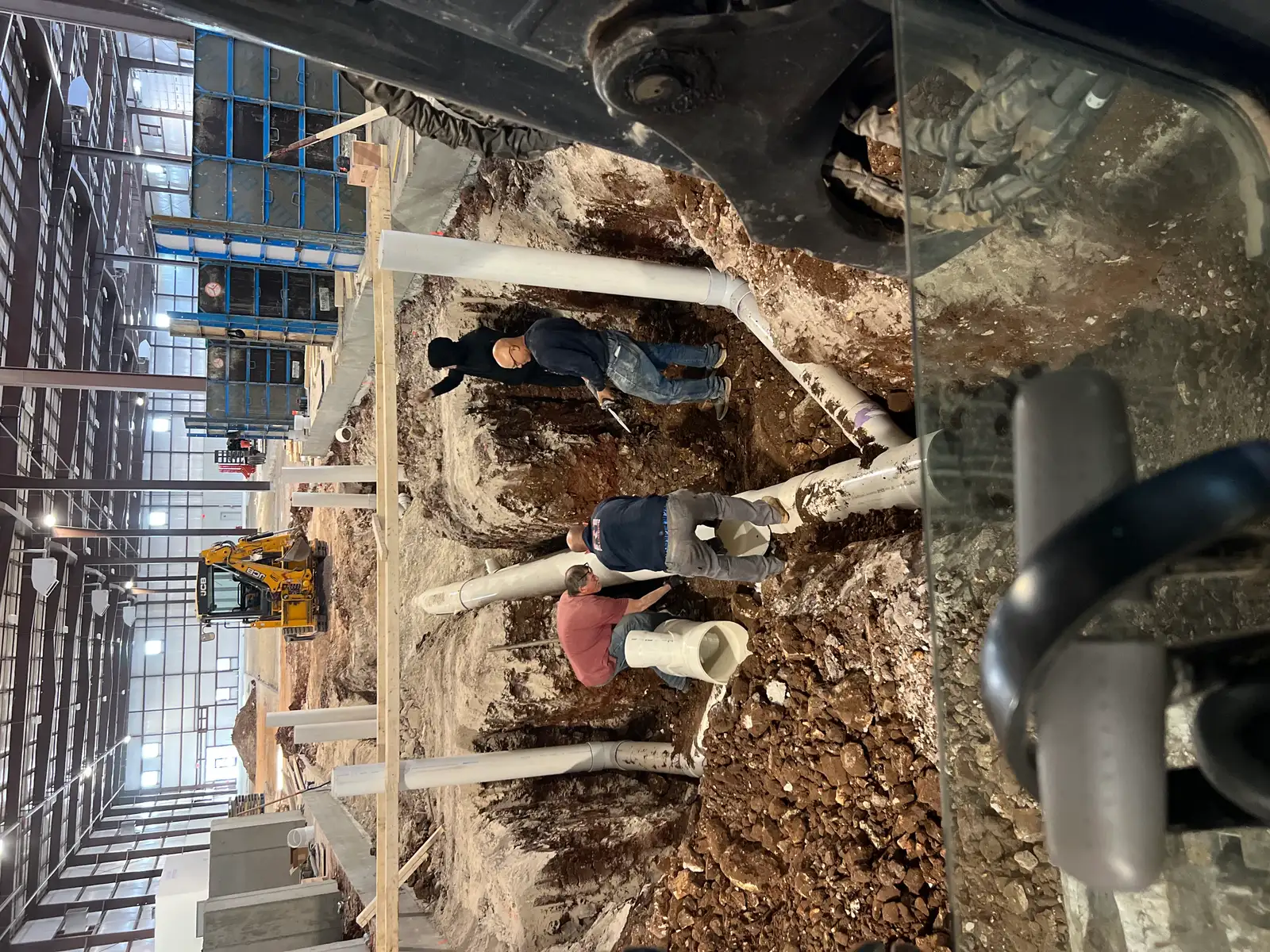
What Does a Warehouse or Industrial Concrete Floor Project Include?
Industrial floor projects start with a detailed scope: load requirements, flatness tolerance, surface treatment, and coordination with the facility's construction or renovation schedule.
Request a Free EstimateWhen Do You Need Warehouse & Industrial Floors?
New warehouse or distribution facility
Floor pours for new construction, coordinated with the construction schedule and racking or equipment installation.
Facility renovation or expansion
New floor sections in expanding facilities or tenant spaces being converted to warehouse use.
Failing existing floor
Existing floors with joint failures, cracking, or surface deterioration that affects operations or creates equipment clearance issues.
Upgrading for heavier equipment
Facilities adding heavier forklifts or racking that exceeds the capacity of the existing floor spec.
What Matters on Every Warehouse & Industrial Floors Project
Floor flatness (FF) and levelness (FL) tolerances
Forklifts and high-reach equipment require flatness tolerances that exceed residential standards. FF and FL numbers need to be specified before the pour based on equipment requirements.
Slab thickness and reinforcement for load
Forklift axle loads and racking point loads determine reinforcement design and slab thickness. Under-designed floors fail at joint edges and under rack legs.
Joint placement for equipment paths
Saw-cut joints should be coordinated with equipment travel lanes — joints in forklift paths chip and deteriorate faster. Joint layout is part of the pre-pour planning.
Sub-base preparation under industrial loads
Industrial floor loads are significantly higher than residential. Sub-base design and compaction need to reflect the intended use.
How KC's Clay Soil and Freeze-Thaw Cycles Affect Warehouse & Industrial Floors
Kansas City's expansive clay soil and 30+ annual freeze-thaw cycles require specific base preparation, mix design, and joint spacing — regardless of the service type. We account for local conditions in every project specification across Olathe and the KC metro.
Clay subgrade under industrial loads
Warehouse and industrial loads on KC's clay subgrade require engineered base preparation. The sub-base for an industrial floor is not the same as for a parking lot.
Coordination with construction schedule
Floor pours often have to coordinate with structural work above and utility rough-in below. This coordination is built into the written scope and timeline.
How Every Warehouse & Industrial Floors Project Works in Olathe
Site visit first. Written scope second. Nothing starts without your approval.
Start the ProcessRequest Estimate
Call, fill out the form on this page, or email us. Tell us about your project — residential or commercial, rough scope, timeline. We'll schedule a site visit.
Site Review
We visit the site in person. We check existing conditions, base conditions, drainage, grades, and anything relevant to the scope. This is where most problems get caught before they become surprises.
Written Scope
You receive a written quote covering the exact work: materials, specifications, prep requirements, finish type, timeline, and price. Nothing starts without your sign-off.
Prep, Pour & Finish
We execute to the agreed spec. Proper base prep, forming, reinforcement, pour, and finish. No shortcuts on what's underneath — that's where concrete work lasts or fails.
Final Walkthrough
We walk the completed work with you before we leave. Any questions get answered on the spot. You'll know what to expect during the cure period.
Warehouse & Industrial Floors Questions
Common questions about this service, timeline, specifications, and how we work.
View All FAQsPrimary Service Areas
What PSI concrete is used for warehouse floors?
Most warehouse and industrial floors use 4,000 to 5,000 PSI concrete with fiber mesh or rebar reinforcement. Higher PSI may be specified for heavy industrial applications. Mix design is determined by load requirements and specified in the written scope.
What flatness standards are used for industrial floors?
Flatness is specified in terms of FF (Floor Flatness) and FL (Floor Levelness) numbers. Required tolerances depend on equipment being used — high-reach and narrow-aisle forklifts require tighter tolerances than standard counterbalanced units. We discuss requirements during the site visit.
How do you handle saw-cut joint placement in a warehouse?
Joint placement is planned in coordination with equipment travel lanes, racking layouts, and operational requirements. Joints in forklift paths need to be sealed and maintained to prevent edge chipping.
How long after pouring can the floor be put into service?
Standard recommendation is 7 days before foot traffic and 28 days before heavy equipment operation, though actual timing depends on mix design and curing conditions. We specify cure requirements and timing in the written scope.
Ready to pour your warehouse floor?
Request a free estimate. We'll review load requirements, flatness tolerances, joint layout, and coordination needs — and send a written scope.